
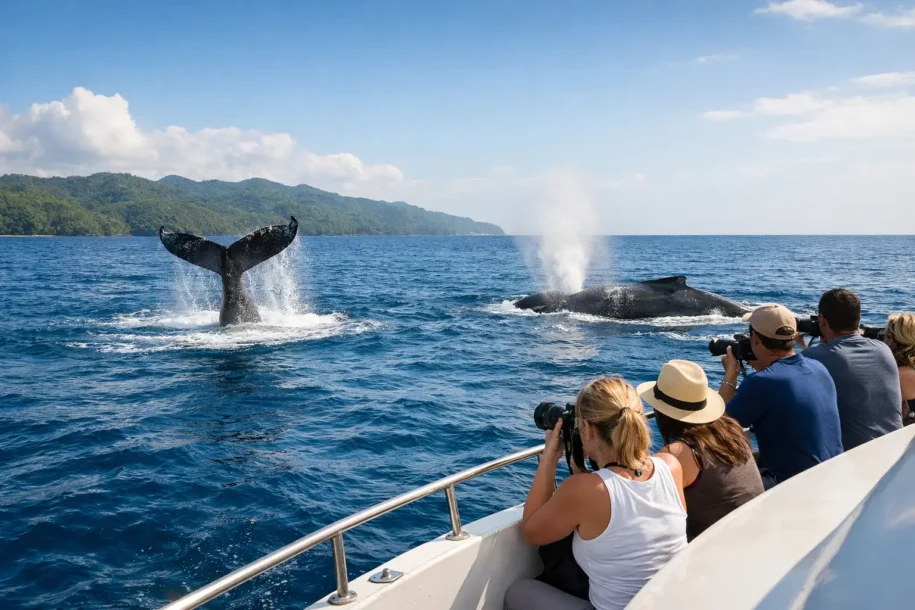
Each winter, the waters off the Samaná Peninsula become a nursery, courtship ground, and front-row stage for thousands of migrating humpback whales. A Samana whale watching excursion is not a theme-park-style wildlife outing with guaranteed choreography. It is far better: a respectful encounter with one of the Caribbean’s most extraordinary natural events, shaped by weather, patience, and the quiet thrill of spotting that first breach on the horizon.
For couples, families, and private groups who value comfort as much as the experience itself, the details matter. The right departure point, boat size, transfer plan, and seasonal date can turn a good day on the water into a truly elevated Dominican memory.
When Is Whale Watching Season in Samaná?
Humpback whales typically arrive in the warm waters around Samaná Bay from mid-January through late March. February is often considered the heart of the season, when sightings are especially frequent and the bay feels alive with activity. Exact conditions change from day to day, of course. Wildlife follows its own timetable, and no responsible operator should promise a breach on cue.
The whales travel from colder North Atlantic waters to breed and give birth near the Dominican Republic. Their size is difficult to appreciate until you see one surface beside a boat. An adult humpback can stretch roughly 40 to 60 feet long, yet it may appear with surprising grace: a dark back breaking the surface, a fluke rising cleanly into the air, or a powerful breach that sends a white spray across the blue water.
Morning departures are often appealing because the sea can be calmer earlier in the day. Still, comfort depends on the weather forecast, your group’s tolerance for boat movement, and the specific departure marina. A thoughtful local host will help you choose an itinerary that fits those realities rather than selling a one-size-fits-all schedule.
What a Samana Whale Watching Excursion Feels Like
Most whale-watching experiences begin with a coastal transfer to the marina, followed by a guided cruise into the protected waters where whales are commonly observed. Once the captain reaches the viewing zone, the pace changes. Boats slow down, engines reduce noise, and everyone begins scanning the surface for a blow, fin, or flash of movement.
The most memorable moments are often not the loudest ones. A mother and calf may surface several times at a respectful distance. A young whale may slap its tail against the water. You may hear the exhale before you see the whale itself. On a clear day, the green mountains of the peninsula and open Caribbean light make the experience feel wonderfully cinematic without needing to be staged.
Quality matters here. A well-run excursion is guided by captains and crew who understand local whale-viewing protocols, approach carefully, and give the animals space. That distance is part of the privilege. Chasing whales, crowding them, or racing from sighting to sighting may produce a rushed photo opportunity, but it does not create the calm, considered experience discerning travelers come to Samaná for.
Private comfort or a shared boat?
A shared departure can be a good fit for travelers who want a straightforward seasonal adventure and are comfortable following a fixed schedule. It is usually the more accessible option, but it can involve larger groups, less flexibility, and a busier boarding process.
A private or upgraded arrangement suits couples celebrating something special, families traveling with children or older relatives, and groups who prefer more room to relax. Private planning can allow for tailored pickup timing, a more comfortable vehicle, greater coordination at the marina, and a pace built around your party. It also gives you more control over the details that affect the day: snacks, music, seating preferences, photo stops, and whether to combine whale watching with another Samaná highlight.
MS Excursion can coordinate elevated seasonal experiences with fully insured transportation, experienced local teams, and customized planning for travelers who do not want logistics to interrupt the day.
Getting to Samaná From Punta Cana
This is the question many resort guests should ask before booking. Samaná is not next door to Punta Cana. A same-day journey can be long, especially when you add early pickup, road travel, marina check-in, time on the water, and the return transfer. For energetic travelers on a short stay, a full-day excursion can still be worthwhile. For honeymooners, young children, multi-generational families, or anyone who prefers a slower rhythm, an overnight Samaná stay may be the more luxurious choice.
The trade-off is simple: a day trip maximizes your resort time and keeps the itinerary compact, while an overnight allows the peninsula to unfold at a more relaxed pace. Samaná is worth more than a marina visit. Depending on your schedule, you may want to pair the whale expedition with Cayo Levantado’s bright shoreline, a visit toward El Limón Waterfall, or an unhurried lunch overlooking the bay.
Private transportation changes the feel of a long travel day. Instead of coordinating meeting points or sitting through multiple hotel stops, your group can depart from your hotel, villa, or Cap Cana residence on a schedule designed around your booking. Licensed drivers, air-conditioned vehicles, and clear pickup communication are not glamorous details, but they are exactly what preserve the polished feeling of a premium excursion.
What to Wear and Bring
Samaná’s winter whale season can still be hot and bright, with wind on the water making the boat ride feel cooler than the beach. Wear lightweight clothing, sunglasses, and a hat that secures comfortably. Reef-safe sunscreen is a smart choice, but apply it before boarding so sprays and lotions do not make the deck slippery.
Bring a light cover-up or windbreaker, especially for morning trips. If you are prone to motion sickness, prepare in advance with the remedy recommended by your physician or pharmacist. Waiting until you feel unwell is rarely effective. It is also wise to keep your phone, camera, and any medication in a small water-resistant pouch.
For photographs, do not spend the entire excursion looking through a screen. Whales can surface unexpectedly, and a phone camera may not capture every moment. Take a few photos, then put the device down. The memory of watching a humpback lift its tail against the Samaná coastline will outlast a dozen imperfect zoom shots.
Safety, Sea Conditions, and Family Considerations
Whale watching is a natural marine activity, which means sea conditions always have a say. A responsible captain may adjust the route, departure time, or itinerary if wind and swell affect comfort or safety. That is sound judgment, not a disappointment. Choosing an insured vessel, licensed crew, and a team that communicates clearly is the best way to protect your time and peace of mind.
Families should consider the length of the overall day, not just the time spent viewing whales. Younger children may love the moment of a breach but struggle with a lengthy road transfer or rolling water. Older relatives may be perfectly comfortable on a stable boat yet benefit from priority boarding and an itinerary with fewer rushed transitions. Share those needs before reserving so the experience can be matched to your group rather than forcing your group into a standard format.
If a member of your party has limited mobility, is pregnant, or has a medical concern, ask directly about boarding conditions, restroom access, life jackets, seating, and expected sea state. Clear answers before departure are part of white-glove service.
How to Plan the Best Day
Book your seasonal date early, particularly for February weekends and holiday travel periods. Confirm whether transportation, marina fees, refreshments, and any add-on stops are included. Ask about the approximate time on the water and the expected total door-to-door duration from your accommodation. Transparent details help you compare experiences fairly.
Then leave room for nature. The finest whale-watching days are not built around a rigid checklist. They are built around a capable captain, respectful viewing, comfortable logistics, and enough time to let Samaná surprise you. When a humpback rises from the bay with the peninsula in the distance, the best plan is simply to be present for it.


Leave a Reply